
If you fill and cap trigger sprayers or fine-mist pumps by hand, you have probably heard the same thing for years: your cap can't be fully automated unless you have do a large capital investment. The dip tube gets in the way. The stem has to be torqued just right. So you keep a few people at a table pressing sprayers onto bottles one at a time, and you build that labor into your cost of doing business. That assumption is worth a second look.
Why Sprayer Caps Are Often Manual
The stem, or dip tube, is the whole catch. On a trigger or pump sprayer, that thin tube has to drop cleanly into the neck of the bottle before the closure tightens. Most capping machines were built for flat caps and simple screw closures. They had no dependable way to place a stem, so anything with a dip tube fell back to hand assembly. That covered a lot of products: cleaning sprays, personal care mists, automotive and garden sprayers, basically anything you pull a trigger on.
So the problem was never really your volume or your budget. It was the stem.
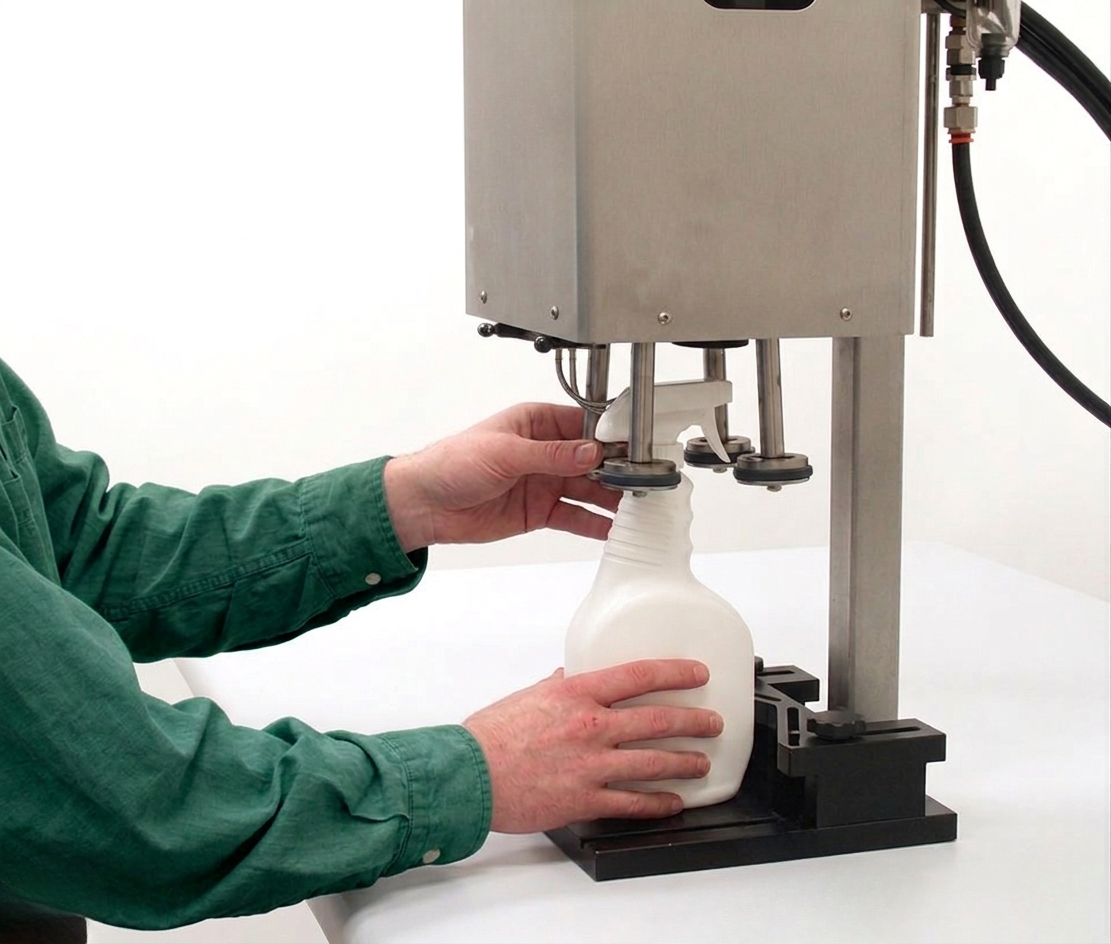
What Hand-Capping Actually Costs You
The labor is the obvious part, but it is rarely the most expensive part. When the dip tube has to be lined up and pressed in by hand, you usually need more than one person on that single step, and those people are tied to the slowest hands on the line. That sets the pace for everything behind them.
Then there is consistency. Hand pressure changes from one operator to the next, and from the start of a shift to the end of it. That variation shows up later as leaks, loose sprayers, and returns, and those cost far more than the few seconds you saved at the bench. The product comes back, the account loses confidence, and you eat the replacement.
What Changed: New Stem-Capping Machine
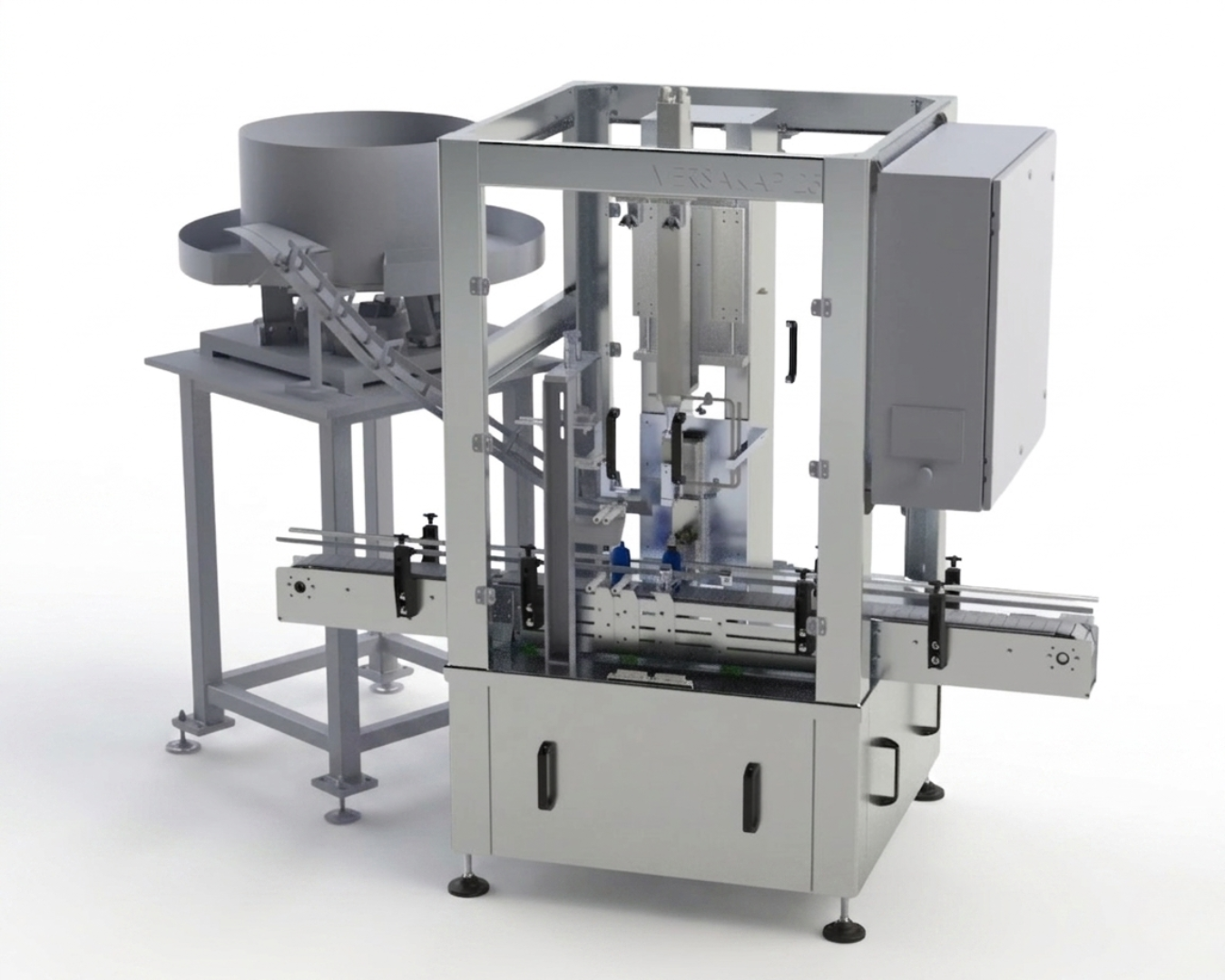
The VersaKap was built specifically for that step. In a single motion it lines up the pump or trigger stem with the bottle, places the cap, and applies torque to your exact spec. The dip tube placement that used to force you into hand assembly is handled automatically, which is the part everyone said could not be done on a machine.
It also checks its own work. An onboard quality system measures applied torque on every cap and rejects the ones that miss, so an inconsistent seal gets caught on your line instead of at your customer's. One operator tends the machine rather than a crew working a bench, and the line runs at a steady pace instead of whatever the longest day allows.
If your product sprays, that one capability is the line between staying at a hand-capping table and running an automated line.
How to Know You’ve Outgrown Hand Capping
Automating something you've done by hand for years is a real decision, not an obvious one. The clearest signs tend to show up together. You keep adding labor hours to capping and still fall behind on orders. Hand pressure is inconsistent enough that you're seeing leaks, loose sprayers, or returns. The repetitive motion is turning into a hiring or injury problem rather than just a speed one. A retail or co-packing account is about to ask for volume you can't hit by hand. And if you run sprayer caps, there's often one more: you wrote automation off years ago and never rechecked. If two or three of those sound familiar, the question stops being whether to automate. It becomes what to ask before you buy.
The Questions to Ask Before You Automate
Whatever machine you look at, ours included, walk the vendor through these:
What is my volume today, and where will it be in 18 months?
Can the machine place the dip tube consistently?
How many products do I switch between, and how long does changeover take?
What are inconsistent caps costing me right now in returns and rework?
What range of bottle and cap sizes does the machine need to handle?
How will it fit into my existing conveyor and line?
What labor am I displacing, and what is the realistic payback window?
Not every operation is ready to automate, and a good vendor will say so when that's the case. If your volume is low and steady, a hand-capping table may still be the right call, and there is no sense overbuilding for orders that are not coming. However, if you make a product that sprays and you are still assembling it by hand because someone told you there was no other option, that reason no longer holds up.
When you’re ready to get specific, our Contact Page requests cap and bottle dimensions, speed and torque target, and more. You don’t have to provide this but we just want to get all the production data asap — to get you the VersaKap of your production automation line dreams.